
Lab films
The Lab Competition is a hive of activity where you can discover works that are literally out of the ordinary. The Clermont-Ferrand Lab opens its doors to the most curious of you, with unexpected intersections, original approaches and a consummate art of risk-taking.
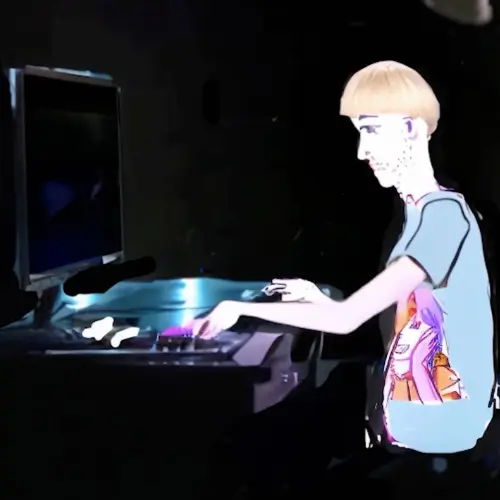
A form that thinks
In its 25 years of existence, the Lab Competition has strived to cross, even to transcend, the borders between documentary and experimental cinema. The art of restraint shall not be the hallmark of the 2026 Lab competition: 12 documentary films take the lion’s share of the 24 films in the selection. At the frontiers of cinema, it is clear that contemporary art is rediscovering its relationship to reality and its ties to the tradition of documentary film, breathing new life into the shared and ever-shifting space between fiction and non-fiction. We are interested in studying the productivity of these encounters, new tools such as AI, deterritorializations, and the reciprocal dialectics between these two approaches.
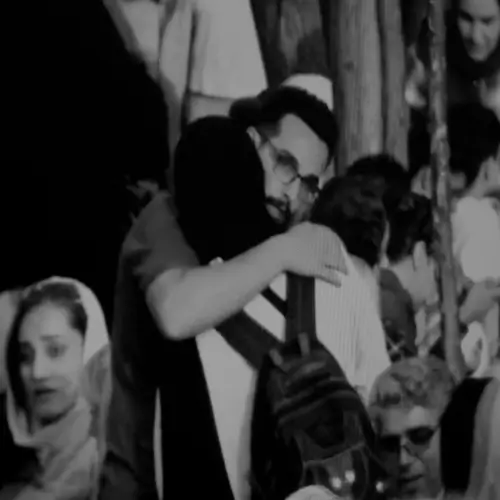
A true scratch-off ticket of reality, Lengua Muerta (Dead Tongue) by the Chilean José Jimenez strives to bring forth light from the vibrant texture of the black and white film, which captures a hostile landscape, both grandiose and devastated, seemingly reflecting the character’s identity. Trauma emerges within the fragments of discourse, conveying the unspeakable. In this disjointed testimony, riddled with gaps and omissions, a name is uttered. Ingrid Olderöck. We know almost nothing about her, except for her relationship with the military dictatorship and her fondness for dogs, whose presence evokes a threat and ambiguity: are they hers? What purpose did they serve? The film chooses to reveal only snippets of information, leaving us to imagine the unimaginable in the folds and creases of the narrative. It is in film that José Jimenez finds the space to recount this essential piece of memory, for history repeats itself, as current events show us: José Antonio Kast, the far-right candidate in the Chilean presidential election, has reason to rejoice. All signs indicate that this admirer of General Augusto Pinochet has every chance of winning, 35 years after the fall of the dictatorship.
O Rio de Janeiro Continua Lindo (Rio Remains Beautiful) is the title of the film by Brazilian director Felipe Casanova, but it’s also the title of a song by Gilberto Gil released in the late 1960s, denouncing the Years of Lead and the military rule in Brazil. In his film, suspended in time, the Carnival celebration becomes a space for memory and political resistance. A mother heartbreakingly searches for her missing son. Current events catch up with us here once again: “121 dead.” The headline in the Rio de Janeiro daily newspaper Extra is laconic. It’s Wednesday, October 29th, 2025. The day before, the operation mobilizing 2,500 police officers in a favela in northern Rio became “the deadliest in the history of the state of Rio de Janeiro.”
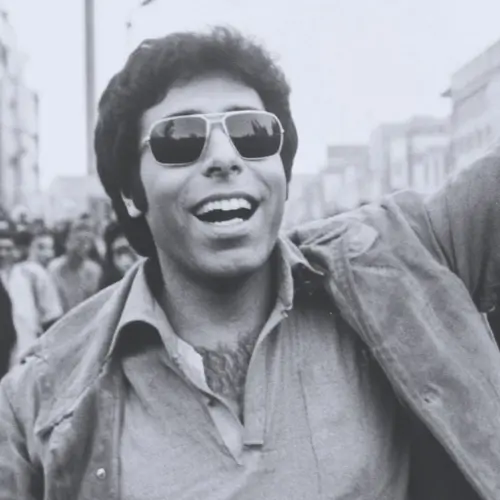
At the opposite end of the spectrum, Hélène Giannecchini’s luminous I Want My People to Be Remembered dialogues with the 1970s photographs of Donna Gottschalk. The filmmaker reconstructs queer memoirs and traces back their genealogies. The construction of her perspective is inseparable from the emergence of the nascent LGBT+ rights movements, in which she is active, at a time when same-sex relationships were still illegal in the United States. As with Lengua Muerta, sound is essential, but here it is clear: the grain of 1970s audio cassettes captures the music and laughter, all the beauty and power of queer relationships.
Trained at Le Fresnoy, Nicolas Gourault documents the process of autonomous vehicles being tested on our roads in his film Their Eyes. To navigate their surroundings, many rely on the work of clickworkers from the Global South. The production, development, and dissemination of these digital technologies raise political, economic, and environmental concerns that are increasingly being debated. However, their consequences for North-South relations are still too often ignored. The director brilliantly demonstrates how they exacerbate inequalities while creating new forms of dependency and exploitation.
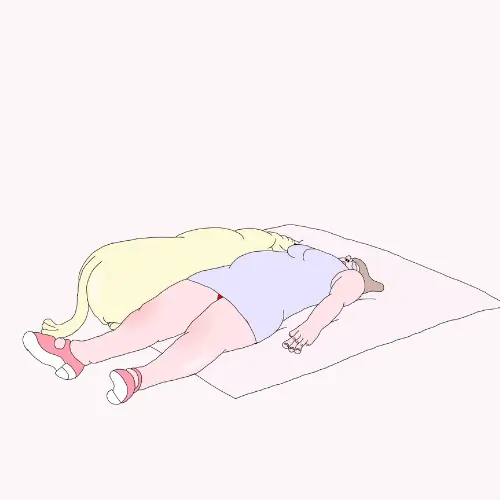
Documentary films are once again a major focus this year, but that doesn’t prevent the Lab Competition from playfully wriggling between genres; quacking and darting away like the frightened ducks in Dieu est timide (God Is Shy). This animated fiction by Jocelyn Charles recounts our worst fears under the guise of innocent entertainment: with nods to film history, a tribute to the master Charles Burns, and a Marie Pervenche who arrives unannounced (for those under 40…). Danièle Évenou, with his gentle voice, narrates the worst in this very surprising animated film.
Fiction also finds its way into this new 2026 offering from the Lab Competition, with, among others, It Lives Under the Snow from the very promising Igor Smola, “cousin d’Azerbaïdjan” by Clément Cogitore and his Braguino, (winner of the 2018 Clermont-Ferrand ISFF award for best original score) which led us deep into the Siberian taiga. Igor Smola muddies the waters and leads us into family histories which may or may not be founded in reality. Whether this narrative be composed of pure fantasy or of some truth, let us be lulled by this human comedy.
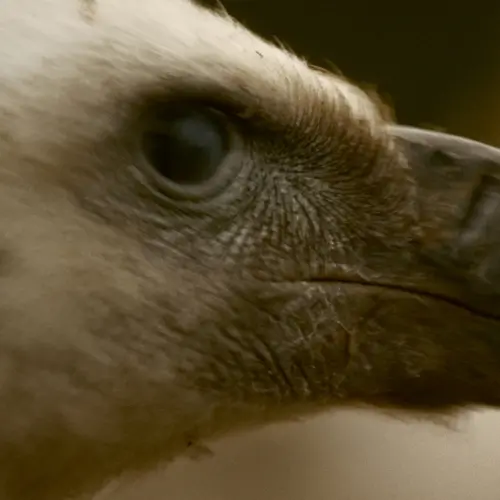
With Nieto, a friend of the Festival, comes a total loss of bearings. The indefinable filmmaker has seen several of his films previously selected at Clermont, and was awarded in 2022 for Swallow the Universe. His latest film, Um, is like a big candy that one sucks eagerly, discovering its layers and the next flavor before arriving at the sour powder in the center with a volatile yet enjoyable hysteria, far from Frenchman Hippolyte Burkhart-Uhlen’s Équarrisseurs (Flayers), an ultra-graphic film that pleas for a peaceful coexistence between humans and majestic necrophagous birds, sacred or repugnant depending on the era and civilization.
The synthesis of the arts exists in multiple forms – temporary, unstable, surprising. A space like the latest edition of the Lab Competition precisely allows for these kinds of unexpected dialogues.
0
th
edition
0
countries represented
0
Programmes
0
animations
0
films notified
0
documentaries
0
films selected
Competition coordination
Calmin Borel
c.borel@lecourt-clermont.org
Lab Competition selection committee
Calmin Borel, Lucas Brunier-Mestas, Fanny Dauny, Alexandre Martin, Sarah Momesso, Christophe Soum, Jérôme Ters, Camille Varenne.